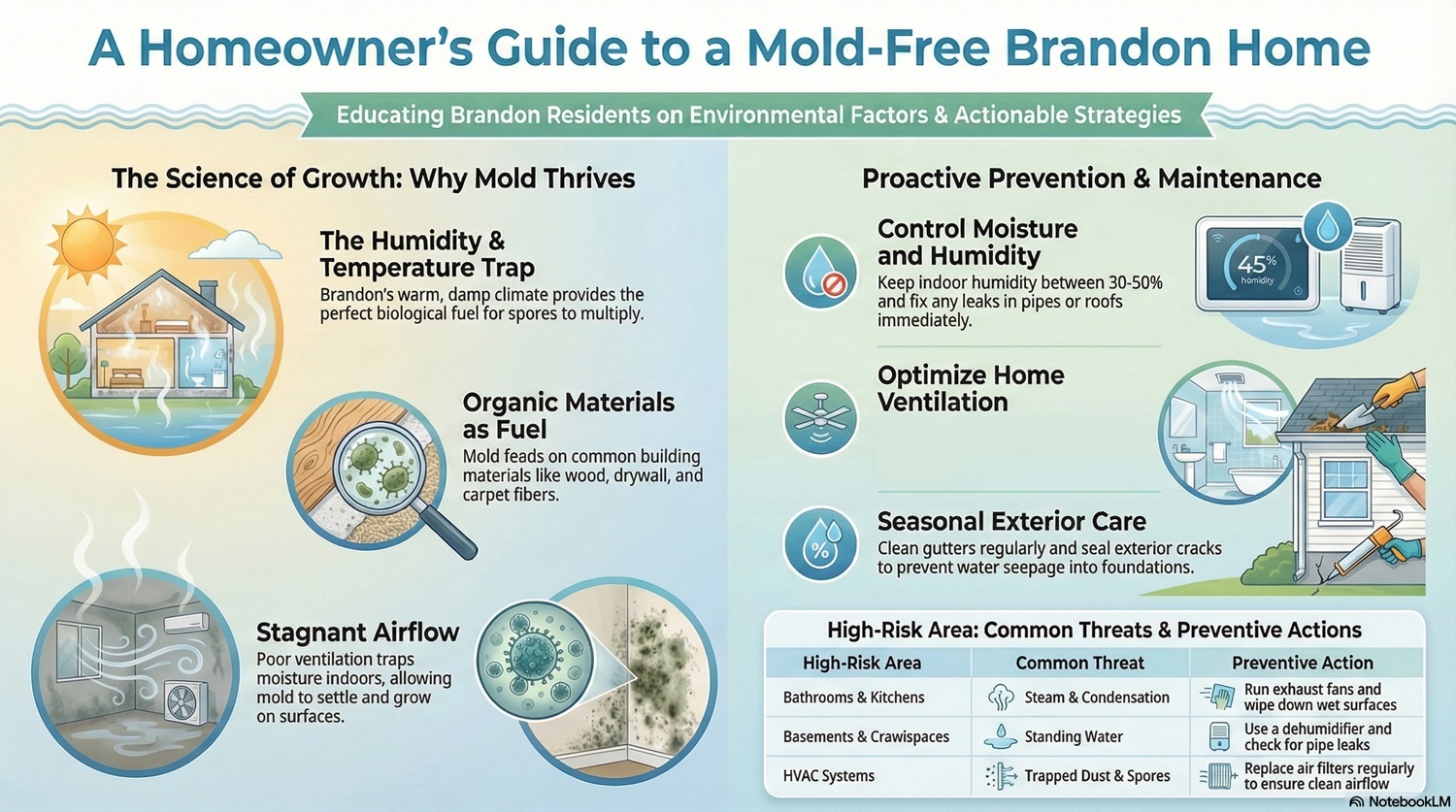
Mold growth in your home can be both unsightly and unhealthy, especially in a place like Brandon where weather and humidity levels can create the ideal environment for molds to thrive. Fortunately, there are proactive strategies you can implement to keep mold at bay and ensure that your home remains safe and comfortable. In this guide, we will explore what causes mold, practical prevention strategies, proper maintenance routines, and signs that mold might be starting to form. With a friendly, conversational tone, we aim to provide you clear steps and helpful tips so you can protect your Brandon home from mold growth.
Mold is a type of fungus that grows in damp or humid environments. Though many types of mold are harmless, some can cause health problems, particularly for those with allergies, asthma, or compromised immune systems. Mold can spread quickly and damage building materials, which is why prevention is key. In essence, preventing moisture buildup and promoting proper ventilation in your home can significantly reduce the risk of mold taking hold.
Exposure to mold spores can lead to issues such as:
Keeping mold growth under control is not just about maintaining your property; it’s also about safeguarding your health and that of your loved ones. Regular inspections and maintenance can be a wise investment for your overall well-being.
Before diving into prevention strategies, it’s essential to understand what conditions promote mold growth. In Brandon, certain environmental factors can compound the risks, such as seasonal changes, rainfall patterns, and indoor humidity levels.
Mold thrives when the following conditions are present:
Understanding these factors helps in identifying vulnerable areas in your home and applying specific measures to combat mold growth.
Now that we understand what conditions mold requires, it’s time to focus on practical ways to prevent it from establishing itself in your Brandon home. Here are several strategies that can help:
Moisture control is at the heart of mold prevention. To maintain a dry environment in your home, consider the following steps:
Image Suggestion: A simple diagram showing common household areas prone to moisture buildup, along with icons for leaks, dehumidifiers, and ventilation.
A well-ventilated home not only feels fresh but also discourages mold growth. Here are some tips to ensure your Brandon home has optimal air circulation:
Regular cleaning can go a long way in preventing mold. Establishing a routine that tackles moisture and dust accumulation can reduce the chance of mold forming. Here are some maintenance tips:
Table Suggestion: A simple table listing household areas, common mold-inducing factors, and preventive actions could be useful to keep on a service page.
If you’re considering renovations or new constructions, choosing mold-resistant materials may be a wise decision. These products can help reduce long-term vulnerability to moisture-related issues:
Video Suggestion: A short educational video demonstrating the differences between standard materials and mold-resistant ones can be valuable for homeowners recently undergoing renovations.
Even with all preventive measures in place, mold can sometimes become an issue. Early detection and immediate action are crucial. Here’s what you can do if you suspect mold growth in your home:
Mold growth is often accompanied by visible signs and odors. Watch out for:
If you believe mold is starting to form, take prompt action:
Keeping mold at bay is an ongoing process. This next section provides additional maintenance tips designed to keep your Brandon home in tip-top shape.
It is a good practice to perform regular home inspections, especially in areas where mold might be more likely to occur:
Keeping up with everyday maintenance can greatly reduce mold risks. Consider these everyday habits:
While many tasks can be handled on your own, occasionally it’s best to enlist the help of professionals. Professional mold inspection and remediation services can help ensure that your home remains spotless and safe.
Call-to-Action: If you suspect any mold issues or simply want a professional inspection, contact our expert team in Brandon today for a thorough evaluation and safe remediation solutions.
Understanding how other homeowners successfully prevented mold can be a reassuring way to proceed with your own strategies. Below are some illustrative examples:
In the heart of Brandon, one historic home faced recurring mold problems due to its old windows and aging insulation. The homeowner partnered with a local renovation team to:
The result? A noticeable decrease in indoor humidity and an absence of mold growth over several years. This example emphasizes the need for timely interventions and upgrades in older homes.
A family in Brandon recently moved into a newly constructed home that had incorporated mold-resistant materials from the start. The builders used:
This proactive approach not only enabled energy efficiency but also kept the home free of mold, setting a benchmark for modern construction techniques in mold prevention. The homeowners note that combining advanced construction with regular upkeep creates a truly mold-resistant environment.
There are several myths about mold that might lead homeowners to neglect proper preventive care. Clearing up these misconceptions is an important step in protecting your Brandon home.
Reality: While it’s true that mold thrives in humid environments, it can grow anywhere moisture is present. Brandon experiences varying weather conditions throughout the year that can promote mold growth indoors if proper precautions aren’t taken.
Reality: Beyond aesthetic concerns, mold can cause significant damage to your home’s structure and negatively impact your health. Even minor growth can lead to costly repairs over time if left unattended.
Reality: While many cleaning agents can remove existing mold, they do not create a long-term barrier against future growth. Addressing underlying moisture issues is key to truly preventing mold from reappearing.
Here are some extra pointers to consider, ensuring that your home remains as resistant as possible to mold development:
Below are some of the common questions homeowners in Brandon ask about mold and how to mitigate its effects:
A: We recommend a thorough inspection at least twice a year, ideally during the transitional climate periods in spring and autumn, when humidity and temperature shifts are most pronounced.
A: Yes, for small mold issues, you can clean the affected area using solutions like diluted vinegar or commercial mold removers. However, if the problem is extensive, it’s best to reach out to professionals for thorough remediation.
A: Improved ventilation is crucial, but it needs to be combined with moisture control, regular cleaning, and proper maintenance. Ventilation is a key part of a comprehensive mold prevention strategy but not a standalone solution.
In summary, preventing mold growth in your Brandon home is a multifaceted process that includes moisture control, proper ventilation, regular cleaning, and the use of mold-resistant materials where possible. Here are some final steps to keep in mind:
Call-to-Action: Don’t let mold compromise the comfort and safety of your home. For personalized inspection or remediation services, reach out to our Brandon experts today for peace of mind and professional support.
If you have any additional questions about preventing mold in your home or need expert help with a current issue, please contact our team. We’re here to help ensure that your home remains a safe, healthy, and comfortable space for you and your family. Our professionals provide comprehensive mold inspection, preventative recommendations, and fast remediation services in the Brandon area.
By combining vigilance with effective preventive strategies, you can significantly reduce the risk of mold taking hold in your home. Follow these guidelines and maintain a proactive approach to home care to enjoy a mold-free environment all year round. Thank you for trusting us with your home’s well-being!